Every year, millions of people open a brokerage account with the same basic goal: grow their money. But almost immediately, they run into a fork in the road — should I invest, or should I trade? The two words get thrown around interchangeably, yet they describe fundamentally different approaches to the market, with different time horizons, different risk profiles, and different skill sets. Understanding investing vs trading isn’t just a semantic exercise — it shapes how much time you’ll spend glued to a screen, how much stress you’ll take on, and ultimately, how your money grows (or doesn’t). This guide is written for beginners weighing their first brokerage account, as well as intermediate market participants who’ve dabbled in both and want a clearer framework for choosing a lane. By the end, you’ll understand exactly how investing and trading differ, when each one makes sense, and whether combining the two could work for you.
Table of Contents
- What Is Investing?
- What Is Trading?
- Investing vs Trading: Comparison Table
- Key Differences Explained
- Pros and Cons of Investing
- Pros and Cons of Trading
- Which Is Better for Beginners?
- Can You Do Both?
- Real-World Examples
- Risk Management Tips
- Frequently Asked Questions
- Conclusion
What Is Investing?
Investing means putting money into an asset — a stock, a bond, a fund, real estate — with the expectation that its value will grow over years or decades. Investors aren’t trying to predict tomorrow’s price movement; they’re betting on the long-term trajectory of a company, an economy, or an asset class. The classic example is buying shares of an S&P 500 index fund and holding it through market cycles, rain or shine.
How Investing Works
An investor typically researches a company’s fundamentals — revenue growth, profit margins, competitive position, management quality — or simply buys a diversified fund that tracks a broad market index. Once the position is opened, the investor holds it, reinvesting dividends and periodically adding new capital, letting compound growth do the heavy lifting.
Compound Growth: The Investor’s Superpower
Compounding is what happens when your investment returns start generating their own returns. A modest, consistent annual return compounds dramatically over 20–30 years, which is why long-term investors often outperform short-term traders even with far less effort — time in the market matters more than timing the market.
Types of Investments
- Individual stocks (growth or value)
- Index funds and ETFs
- Bonds and fixed-income securities
- Real estate and REITs
- Dividend-paying stocks
- Retirement accounts (401(k), IRA)
Advantages of Investing
- Lower time commitment — no need to watch charts daily
- Historically strong long-term returns from broad markets
- Lower transaction costs due to infrequent trading
- More favorable long-term capital gains tax treatment in many countries
- Less emotionally taxing once a strategy is set
Disadvantages of Investing
- Slower path to visible gains
- Capital can be tied up for years
- Still exposed to market downturns and drawdowns
- Requires patience and discipline to avoid panic-selling
Example: An investor who bought a low-cost index fund in their 20s and kept contributing every paycheck for 30 years, riding out multiple recessions, typically ends up with a portfolio worth many multiples of their original contributions — not because they timed anything perfectly, but because they stayed invested.
What Is Trading?
Trading means buying and selling financial instruments over much shorter windows — minutes, hours, days, or weeks — to profit from price movement itself, rather than from a company’s long-term growth. Traders rely heavily on charts, price patterns, and market timing.
Short-Term Market Participation
Where an investor asks “is this a good business to own for a decade,” a trader asks “where is this price likely to go in the next hours or days.” Trading is fundamentally about capturing volatility rather than avoiding it.
Trading Styles
- Day trading — opening and closing positions within the same trading day, never holding overnight
- Swing trading — holding positions for several days to a few weeks to capture a price “swing”
- Position trading — holding for weeks to months, blending trading and investing techniques
- Scalping — making dozens of trades a day for very small, quick profits
Advantages of Trading
- Potential for faster, more frequent profit opportunities
- Can profit in both rising and falling markets (shorting)
- Flexibility — capital isn’t locked up for years
- Skill-based edge can be developed and refined
Disadvantages of Trading
- Requires constant market monitoring and fast decisions
- Higher transaction costs from frequent buying and selling
- Short-term capital gains are usually taxed at higher rates
- High emotional and psychological demands
- Most active traders underperform simple buy-and-hold benchmarks over time
Example: A swing trader notices a stock breaking out above a resistance level on strong volume after an earnings beat, buys in, and sells a week later once momentum fades — profiting from the short-term move rather than the company’s multi-year outlook.
Investing vs Trading: Comparison Table
| Factor | Investing | Trading |
|---|---|---|
| Primary goal | Long-term wealth building | Short-term profit from price movement |
| Time horizon | Years to decades | Minutes to weeks |
| Risk level | Moderate, smoothed over time | Higher, concentrated in short windows |
| Return potential | Steady, compounding growth | Potentially higher per trade, less consistent |
| Capital required | Can start small with regular contributions | Often needs more capital for meaningful returns |
| Emotional discipline | Patience, tolerance for volatility | Fast decision-making, strict discipline under pressure |
| Research style | Fundamental analysis | Technical analysis |
| Transaction frequency | Low | High |
| Tax treatment (varies by country) | Often favorable long-term capital gains rates | Often higher short-term/ordinary rates |
| Costs and fees | Low — infrequent trades | Higher — frequent trades, spreads, commissions |
| Stress level | Lower, long-term mindset | Higher, constant monitoring |
| Best suited for | Long-term goals, retirement, passive investors | Active, hands-on, risk-tolerant participants |
Key Differences Explained
Time Horizon
This is the single clearest dividing line. Investors think in years; traders think in days or hours. That difference cascades into everything else — how much research is needed, how often you check prices, and how much a single bad day actually matters.
Market Psychology
Investors need patience and the ability to sit through drawdowns without panic-selling. Traders need fast, unemotional decision-making under pressure, since hesitation can turn a small loss into a large one.
Risk Management
Investors manage risk mainly through diversification and time — spreading capital across assets and letting compounding smooth out short-term volatility. Traders manage risk through position sizing and stop-loss orders, since a single trade can be reversed within minutes.
Diversification and Capital Allocation
Long-term investors typically diversify broadly across sectors, geographies, and asset classes to reduce the impact of any single holding. Traders often concentrate capital in a handful of active positions where they see a short-term edge, accepting more concentrated risk in exchange for focus.
Technical vs Fundamental Analysis
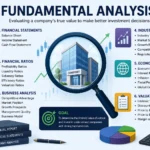
Fundamental analysis — evaluating a company’s earnings, balance sheet, and competitive position — drives most investment decisions. Technical analysis — reading price charts, volume, and momentum indicators — drives most trading decisions. Many experienced market participants use elements of both.
Which Is Better for Beginners?
For most beginners, investing is the more forgiving starting point. Here’s why:
- Learning curve — building a diversified portfolio requires less specialized skill than reading charts and timing entries/exits
- Capital needs — investing works well even with small, regular contributions; meaningful trading often benefits from larger capital and dedicated risk capital
- Risk tolerance — new investors haven’t yet experienced real drawdowns, and trading’s faster losses can be a harsh, expensive teacher
- Time commitment — trading demands hours of daily attention that most beginners balancing a job or studies simply don’t have
Common Beginner Mistakes
- Jumping into day trading without a tested strategy or risk plan
- Trading with money needed for near-term expenses
- Chasing hot tips or social-media hype instead of doing independent research
- Overtrading — mistaking activity for progress
- Failing to diversify a first portfolio
Can You Do Both?
Yes — many experienced market participants run a hybrid approach. A common structure is to keep the bulk of a portfolio (often 80–90%) in long-term, diversified investments for retirement and major goals, while allocating a smaller, clearly defined “risk capital” slice to active trading. This way, a bad trading month can’t derail long-term financial goals, while the trading portion offers a way to build hands-on market skills and potentially generate extra income. The key to combining both successfully is strict separation: different accounts or clearly ring-fenced capital, different rules, and never dipping into long-term holdings to cover short-term trading losses.
Real-World Examples
- The long-term investor: Contributes a fixed amount to a broad-market index fund every month for 25 years, reinvesting dividends and ignoring short-term headlines.
- The swing trader: Identifies a stock building momentum after a strong product launch, buys on a technical breakout, and exits within two weeks once the trend stalls.
- The dividend investor: Builds a portfolio of established, dividend-paying companies to generate a growing stream of passive income alongside long-term price appreciation.
- The day trader: Watches a company’s earnings release, reacts within minutes to the market’s initial overreaction, and closes the position before the market closes the same day.
Risk Management Tips
- Position sizing — never risk more on a single trade or holding than you can afford to lose without derailing your finances
- Stop-loss orders — set predefined exit points for trades to cap downside automatically
- Diversification — spread long-term capital across sectors and asset classes so no single holding can sink the portfolio
- Asset allocation — match your mix of stocks, bonds, and cash to your actual time horizon and risk tolerance, not your mood
- Emotional control — write rules in advance and follow them; don’t make decisions in the heat of a big price swing
- Trade journaling — record every trade’s rationale, entry, exit, and outcome to spot patterns in your own behavior
- Regular performance reviews — periodically compare your results against a simple benchmark to see whether your approach is actually working
Frequently Asked Questions
Which is safer, investing or trading?
Investing is generally considered safer because long time horizons and diversification smooth out short-term volatility. Trading concentrates risk into much shorter windows, which amplifies both gains and losses.
Which earns more — investing or trading?
There’s no universal answer. Skilled traders can outperform the market over short stretches, but most active traders underperform a simple diversified investing approach once fees, taxes, and behavioral mistakes are accounted for.
Which takes more time, investing or trading?
Trading demands far more day-to-day time and attention. Investing can be largely automated through regular contributions and periodic rebalancing.
Can beginners trade?
Beginners can trade, but it’s wise to start with a small amount of dedicated risk capital, paper-trade or practice first, and treat early losses as tuition rather than a portfolio-ending event.
Is trading gambling?
Trading isn’t inherently gambling, but undisciplined trading — without a tested strategy, risk limits, or record-keeping — can closely resemble it. Structured trading with clear rules is a different activity from placing impulsive bets.
Is investing passive?
Investing can be highly passive, especially with index funds and automated contributions, though it still benefits from periodic reviews and rebalancing.
What is the best age to start investing?
The earlier, the better, since compounding rewards time above almost any other factor. Starting in your 20s with small, consistent amounts often outperforms starting later with larger sums.
Can I switch from trading to investing (or vice versa)?
Yes. Many people start with one approach and shift toward the other as their goals, available time, or risk tolerance change. There’s no rule requiring you to pick one permanently.
Do investing and trading use the same tools?
They can overlap — both may use brokerage platforms and market data — but traders typically rely more heavily on charting software and real-time data, while investors lean on fundamental research and portfolio-tracking tools.
Is one strategy taxed more than the other?
In many countries, gains from assets held longer than a year qualify for lower long-term capital gains rates, while short-term trading profits are typically taxed at higher ordinary income rates. Tax rules vary by country, so check local regulations or a tax professional.
Which requires more capital to start?
Investing can start with very small, regular amounts thanks to fractional shares and automated contributions. Trading often requires more capital to generate meaningful returns after accounting for fees and the need for proper position sizing.
What’s the biggest risk of mixing investing and trading without a plan?
The biggest risk is blurring the lines — treating long-term holdings like trades (panic-selling on dips) or treating trades like long-term holdings (“holding and hoping” on a losing position). Keeping clear rules for each bucket avoids this trap.
Conclusion
Investing and trading both aim to grow your money, but they do it in very different ways. Investing rewards patience, diversification, and time in the market, making it a strong foundation for most people’s long-term financial goals. Trading rewards speed, discipline, and skill in reading short-term price action, offering the potential for faster gains alongside meaningfully higher risk and stress. Neither approach is inherently “better” — the right choice depends on your goals, time horizon, risk tolerance, and how much time you’re realistically willing to commit. Many successful market participants ultimately use both: a solid long-term investing foundation for their future, and a clearly separated, disciplined trading strategy for those who enjoy the more active side of the markets. Whichever path you choose, start with a clear plan, only risk what you can afford to lose, and keep learning as you go.